

How creating a people-first culture transforms healthcare leadership.
Read Time: 7 minutes
Summary: What does it really take to become an effective physician leader? In this edition of the NuBrick Partners Leadership Book Club, Dr. David Roberts shares why Everybody Matters by Bob Chapman and Raj Sisodia transformed how he thinks about leadership. Drawing from his experience as both a hospital president and leadership coach, he explores the mindset shift from individual contributor to people-first leader, the importance of curiosity and deep listening, and how creating a culture where people feel valued leads to stronger teams, better organizational performance, and improved patient care.
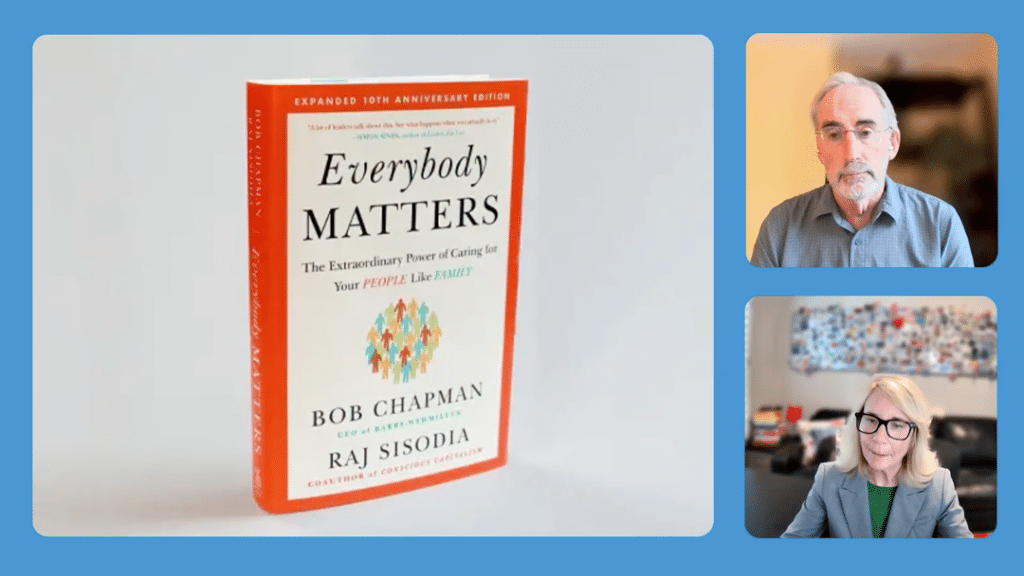
Great leadership books stay with us long after we’ve finished the final chapter.
For Dr. David Roberts, Everybody Matters: The Extraordinary Power of Caring for Your People Like Family by Bob Chapman and Raj Sisodia was one of those books.
In this edition of the NuBrick Partners Leadership Book Club, Roberts shares why this book fundamentally changed his view of leadership and how its lessons continue to shape the physician leaders he coaches today. A cardiologist who became a hospital president, Roberts spent 25 years guiding physician leaders and executive teams in community hospitals, and he brings that dual perspective, physician and executive, to every coaching engagement.
After becoming president of a hospital with 5,000 employees, he found himself asking one simple question every day:
“Do I create a place where these folks can be their best selves?”
That question became a guiding principle for his leadership, and one that’s increasingly relevant as healthcare organizations face workforce shortages, burnout, and constant change.
Why Everybody Matters Still Resonates with Healthcare Leaders
Many leadership books encourage organizations to invest in culture because engaged employees produce better business results. Everybody Matters offers a different perspective.
Bob Chapman argues that creating a workplace where people feel valued isn’t simply a strategy for improving performance. It is one of leadership’s primary responsibilities.
“We build great people who do extraordinary work.”
For Roberts, this idea completely reframed leadership. Instead of viewing culture as something that supported operational goals, he began seeing culture itself as one of the most important outcomes leaders are responsible for creating.
That perspective feels especially relevant today. Healthcare leaders are balancing financial pressures, workforce challenges, quality metrics, and patient expectations. While those priorities remain essential, lasting organizational success begins with the day-to-day experience employees have.
As Chapman describes it, organizations build great products by first building great people.
“We build great people who do extraordinary work.”
The Mindset Shift Every Physician Leader Must Make
One of the biggest transitions physicians experience isn’t learning budgets, governance, or strategic planning. It’s changing how they define success.
Clinical training prepares physicians to become exceptional individual contributors. Leadership requires becoming an exceptional developer of people.
Instead of asking:
“How can I become better?”
leaders begin asking:
“How can I help my team become better?”
Roberts describes this transition as moving from being self-directed to becoming other-directed. Success is no longer measured solely by personal achievement. The growth, engagement, and success of the people around you measure it.
Roberts doesn’t dismiss the metrics. Door-to-balloon time, quality, and outcomes all matter, and physicians are right to care about them. His point is that leadership adds a second question alongside the numbers: how are my people being treated, how are they feeling, and are their careers advancing the way they want them to?
For physicians, that shift often requires intentional leadership development, as it isn’t traditionally taught during medical training.
Culture Isn’t a Byproduct of Leadership. It Is Leadership.
Healthcare organizations devote enormous energy to improving quality, patient outcomes, operational excellence, and financial sustainability. Those goals matter.
But Everybody Matters reminds leaders that organizational culture isn’t simply another initiative. It is the environment that makes sustainable performance possible.
When people feel respected, heard, trusted, and empowered to contribute, stronger collaboration, innovation, and patient care naturally follow. Rather than viewing culture as a tool to achieve better results, Roberts encourages leaders to see building a great workplace as one of their most important responsibilities.
Curiosity Builds Better Leaders
Throughout the conversation, Roberts returns repeatedly to one leadership behavior.
Curiosity.
Great leaders don’t assume they have all the answers. They ask thoughtful questions, seek to understand before responding, and listen deeply.
Roberts calls this, “appreciative inquiry,” a genuine interest in how another person sees a situation. In practice, it can be as simple as pausing to say, “I think I’m hearing you say this. Did I get that right?” When people experience a leader working that hard to understand them, they feel deeply heard.
One particular idea from Everybody Matters continues to influence his leadership approach.
“The job of a leader is to see every situation through the eyes of the team.”
That mindset creates psychological safety, strengthens trust, and changes how leaders respond to disagreement.
That lesson didn’t come naturally to Roberts. As a young interventional cardiologist, he admits, he assumed anyone who disagreed with him needed to be out-argued. Becoming a president taught him something different.
Rather than viewing dissent as resistance, Roberts encourages leaders to see it as valuable information.
As he puts it:
“Dissent is a gift.”
When leaders respond with curiosity instead of defensiveness, they create stronger teams and better decisions.
Leadership in Practice
The next time someone disagrees with you, try asking,
“Tell me more about how you arrived at that conclusion.”
Simple questions often build stronger leadership than immediate answers.
The Care Cascade: How Leadership Shapes Culture
One way Roberts applies the principles from Everybody Matters is through what he calls the Care Cascade. The concept is straightforward. The way leaders treat their direct reports becomes the model those leaders use with their own teams. Those behaviors continue cascading throughout the organization.
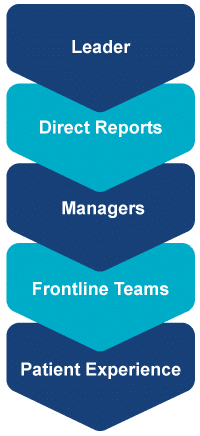
Culture doesn’t spread through mission statements.
It spreads through leadership behavior.
When leaders consistently demonstrate empathy, accountability, respect, curiosity, and trust, those behaviors become embedded throughout the organization.
Roberts experienced the cascade firsthand at one of the hospitals he led. After he changed how he treated his senior leadership team, the behavior spread on its own. Eventually, a frontline nurse stopped him and said, “This place is different now. What’s going on?” Nothing had been announced. The culture had reached her through the way her own manager treated her.
Every Employee Is Somebody’s Precious Child
Perhaps the most memorable lesson Roberts highlights comes directly from Everybody Matters.
Every employee is somebody’s precious child.
It’s a simple statement, but it fundamentally changes how leaders think about responsibility.
Behind every performance metric is a person. Behind every organizational chart is a family.
When leaders intentionally create workplaces where people feel valued and supported, those experiences carry into homes, families, and communities even after employees leave work.
For Roberts, this reminder continues to shape both his leadership philosophy and his daily conversations with physician leaders.
“Every single person in your organization is somebody’s precious child.”
How Roberts Brings the Book into His Coaching
Roberts’ coaching conversations through NuBrick Partners’ physician leadership practice often begin with a deceptively simple exchange. He asks the leader, “So who do you work for? How does that boss make you feel?” The answers come quickly. Then comes the turn: “How do you want your people to feel?” More than one leader has answered, “Probably not like me.”
From there, Roberts explores where caring for people falls on the leader’s hierarchy of responsibilities. Thirty years ago, he says, he would have found the question baffling himself. His job was lowering mortality in post-MI patients. For many mid-career physician leaders, the concept doesn’t come easily, and that’s exactly why he raises it.
He also widens the definition of family. Early physician leaders often assume the docs are their team. Roberts asks who else depends on them for leadership and compensation, and the answer – secretaries, medical assistants, and everyone in between – reveals a much bigger family than they knew. Then comes the question that lands hardest, “How much do you think about how they’re experiencing working in your department?”
For some leaders, this orientation is how they are wired. For others, it takes a conversation, and often a book recommendation. Roberts keeps this one close, “I got a book for you.”
Who Should Read Everybody Matters?
One of Roberts’ final observations may surprise readers. This isn’t just a book for CEOs.
When Roberts is asked who actually shapes an organization’s culture, his answer is direct. It’s not the CEO. It’s the responsibility of anyone leading people day to day, including:
- Frontline managers
- Department leaders
- Physician leaders
- Emerging executives
- Anyone responsible for helping others succeed
Culture is experienced most directly through immediate supervisors. That’s why leadership development matters at every level of an organization, not just in the executive suite.
Leadership Takeaways
Whether you’re leading a clinical department, a physician practice, or an entire health system, Everybody Matters offers practical reminders that apply across every stage of the leadership journey.
- Leadership shifts your focus from personal performance to developing others.
- Organizational culture is built through everyday interactions.
- Curiosity and deep listening strengthen trust and improve decision-making.
- Disagreement can become one of a leader’s greatest learning opportunities.
- Caring for people creates the conditions for exceptional organizational performance.
These aren’t abstract leadership theories. They’re behaviors leaders can practice every day.
Access the Full Leadership Book Club Conversation
Dr. David Roberts’ conversation with Jaclyn Eiler offers thoughtful insights for physician leaders looking to strengthen culture, develop their teams, and lead with greater intention.
Access the complete Leadership Book Club discussion below to hear how the principles from Everybody Matters continue to influence leadership in today’s healthcare environment.
Everybody Matters in one sentence: Create a workplace where people genuinely feel cared for, and extraordinary work follows.
Want to explore what a people-first culture could look like on your leadership team? Connect with David and the NuBrick Partners team to learn more about our physician leadership and executive coaching solutions.
Everybody Matters by Bob Chapman and Raj Sisodia is available wherever books are sold.
About the Book
Everybody Matters: The Extraordinary Power of Caring for Your People Like Family
Authors: Bob Chapman and Raj Sisodia
Recommended by: Dr. David Roberts, Senior Consultant, NuBrick Partners
Recommended for: Physician leaders, healthcare executives, frontline managers, and emerging leaders seeking to build stronger cultures and more engaged teams.
Frequently Asked Questions
Everybody Matters argues that organizations thrive when leaders treat employees as valued individuals rather than resources. The book presents people-first leadership as both a moral responsibility and a powerful driver of long-term organizational success.
Physicians are trained to focus on clinical excellence and measurable outcomes. The book introduces a complementary leadership mindset centered on developing people, strengthening culture, and creating environments where teams can thrive.
The Care Cascade describes how leadership behaviors spread throughout an organization. The way leaders treat their direct reports becomes the model for how those leaders lead others, ultimately shaping organizational culture and the patient experience.
The book is valuable for anyone responsible for leading people, including physician leaders, frontline managers, department directors, healthcare executives, and emerging leaders.
