

Recap of the Leadership Book Club Episode 1 – Access it here.
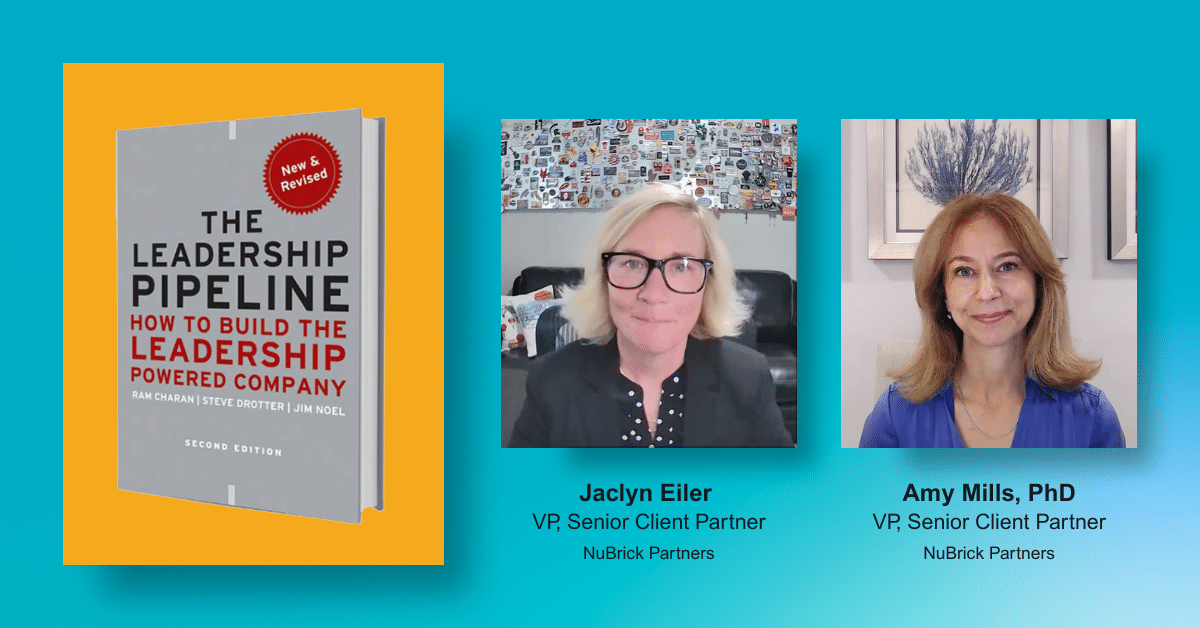
It’s a tale you hear often. A leader working all hours of the day and night to climb the ranks, just to hit a wall and never reach their career goals due to burnout or some other block. Let’s talk about a specific case. Nina’s story is one Amy Mills, PhD, hears often. As one of our leadership consultants and coaches at NuBrick Partners, Amy works with leaders navigating the transition from individual contributor to enterprise leadership.
After 10 years of exceptional performance, Nina’s success led to promotion after promotion, including manager, functional leader, and business leader. But with each step up, she grew more exhausted as it took more and more effort to maintain her impact.
The problem? She hadn’t made the impact shift. She was still trying to do the work that made her successful in the first place, rather than turning her focus to building her team’s capability to create that impact.
Nina is not alone in her story. Amy joined us for the inaugural Leadership Book Club and shares insights from a book that has shaped her approach to working with clients like Nina for years: The Leadership Pipeline by Ram Charan and colleagues.
As an industrial-organizational psychologist and certified coach, Amy has seen countless executives struggle with the same challenge: excelling as individual contributors, earning promotions based on technical expertise, and then finding themselves overwhelmed and burned out in management roles. NuBrick Partners provides coaching and consulting services to get you where you want to be in your career.
The 95% Rule in Leadership Impact
Amy highlights a powerful message from the book that reframes how we think about leadership effectiveness and helps explain what happened to Nina: If you lead a team of 20 people, 95% of the work being produced comes from people other than you. Your role isn’t to do the work. It’s to ensure your team has the capability, space, and support to do it well.
This simple math reveals the fundamental impact shift every leader must make. The skills that made them successful as individual contributors, the technical expertise they spent years developing, and the hands-on work they genuinely enjoy are often the very things holding them back from creating the impact their new role requires.
Why Is Leadership Transition So Difficult?
When Amy from NuBrick Partners works with leaders on this transition, she consistently hears the same response: “But I like doing that work.”
Of course they do. They’ve invested years in developing those capabilities. That technical work is where they have experienced success, recognition, and satisfaction. It’s comfortable. It’s what they know how to do well.
But as Marshall Goldsmith famously said, “What got you here won’t get you there.”
The Time Allocation Exercise Outlines Where Leaders Actually Spend Their Time
One of the most powerful leadership development tools Amy uses comes directly from The Leadership Pipeline. he asks leaders to track where they’re actually spending their time, then compares it to where they should be spending their time based on their current role.
The results are surprising 99% of the time.
Most leaders are spending far too much time on day-to-day activities and using their technical skills to run the business, when they should be focused on strategy, innovation, transformation, and culture building. They haven’t shifted where they create impact.
The Leadership Pipeline Journey from Individual Contributor to Enterprise Leader
As Amy describes it, The Leadership Pipeline walks through the different stages leaders move through as they progress in organizations. You might start as an individual contributor, leading yourself. Then you’re promoted to lead others. Eventually, you might lead managers, then organize functions, and even head up entire businesses. In fact, some leaders go on to lead the whole enterprise, but not without some changes in their workflow.
At each stage of leadership development, you need different skills and a different focus. What’s critical to understand is that each level requires letting go of what made you successful before and embracing new ways of creating impact.
Three Critical Changes for Executives to Make the Leadership Shift
For leaders ready to make this transition from technical expert to strategic leader, Amy at NuBrick Partners focuses on three fundamental shifts grounded in perspectives from the book:
1. Redefine Your Value as a Leader
Your value is no longer measured by your individual output, but by the collective output of your team. This requires letting go of being the person with all the answers and becoming the person who asks the right questions.
2. Invest Time Differently – From Doing to Developing
Instead of spending time on technical work, invest it in coaching conversations, removing obstacles for your team, and creating the conditions for others to excel. The work may feel less tangible at first, but the leverage is exponentially greater.
3. Adjust the Metrics You Measure to Team Performance Over Individual Achievement
Stop tracking only what you accomplish. Start measuring team capability development, how often team members solve problems independently, and whether your direct reports are ready for their next career move.
Moving from Burnout to Sustainable Leadership Impact
Nina’s story had a turning point. Through leadership coaching with Amy, she began to understand that her exhaustion stemmed from trying to maintain her individual contributor identity while holding a leadership title.
Once she made the mental shift to recognize that her role was to multiply impact through others, she found renewed energy and purpose.
The work felt different. She didn’t feel immediate satisfaction, but ultimately the work felt more meaningful. She was building something sustainable: a team that could deliver exceptional results without her constant involvement.
The Leadership Pipeline Applies to All Industries
One of the strengths of The Leadership Pipeline is its broad applicability across industries and leadership levels. Whether you’re an individual contributor considering your first management role, a new manager learning to delegate, or a senior executive leading an entire enterprise, the book provides a roadmap for making the impact shift your specific journey requires.
The Leadership Pipeline in one sentence: The book provides a strong roadmap for understanding the journey from individual contributor to enterprise leader and what you’ll need to carry or let go of along the way.
But the deeper insight is about leadership impact. Leadership isn’t about doing more work. It’s about shifting how you create impact. It’s about recognizing that when 95% of your team’s output comes from people other than you, your job isn’t to be the best technical expert in the room. It’s to build the capability that allows everyone else to excel.
Making that shift is hard. Especially when you genuinely enjoy the work you need to give up. But understanding that this leadership transition is necessary, natural, and navigable makes all the difference.
Want to explore how leadership transitions impact your organization? Connect with Amy and the NuBrick Partners team to learn more about our leadership development and team performance solutions.
The Leadership Pipeline by Ram Charan, Stephen Drotter, and James Noel is available wherever books are sold.
